
.png "JMIR Medical Education (1910 x 320 px)")
The #1 Ranked Journal in Education, Scientific Disciplines
You're at the forefront of leveraging technology, innovation, and open science to revolutionize medical education. When you choose to publish with JMIR Medical Education, you're partnering with a journal dedicated to amplifying your impact:
- Exceptional Reputation: Impact Factor (12.5) & CiteScore (11.0). Your research will be published in a journal with outstanding and growing influence, evidenced by our Impact Factor of 12.5 (Clarivate, 2025) and CiteScore of 11.0 (Scopus, 2024). This places us in the 97th percentile (#46 of 1620) as a Q1 journal in the field of Medical Education. This means your work gains significant visibility and credibility among your peers and the wider medical education community.
- Targeted Focus on Technology, Innovation, and Openness in Medical Education: We are specifically dedicated to research on e-learning, virtual training, and how to effectively train health professionals to utilize digital tools. We welcome original research, reviews, viewpoint, and policy papers on innovation and technology in medical education, with a special interest in open and free tools and digital learning objects. We also invite submissions of non-conventional articles, including open medical education material and software resources. This ensures your work reaches the most relevant audience.
- Broad Indexing for Maximum Discoverability: Your published articles will be widely discoverable through indexing in leading databases including PubMed, PubMed Central, MEDLINE, Scopus, DOAJ, and the Emerging Sources Citation Index (Clarivate).
- Rigorous Peer Review & Expert Editorial Leadership: Led by our distinguished Editor-in-Chief, Blake J. Lesselroth, MD MBI FACP FAMIA (University of Oklahoma | OU-Tulsa Schusterman Center; University of Victoria, British Columbia), our robust peer-review process ensures the highest quality and scientific integrity for your submissions.
- Commitment to Open Access: Your research will be freely accessible globally, ensuring maximum reach and accelerating the dissemination of vital knowledge. All articles undergo careful copyediting and are XML-tagged for submission to PubMed Central.
- Students' Corner: We invite students and trainees from various health professions to submit short essays and viewpoints on all aspects of medical education, particularly suggestions on improving medical education and suggestions for new technologies, applications, and approaches.
Get $100 Off Your First Publication in JMIR Medical Education
Sign up for journal updates to receive $100 off your article processing fee (APC) on your first publication and to stay informed on the latest research, calls for papers, and publishing opportunities in technology-enhanced medical education.
Explore Our Top Articles
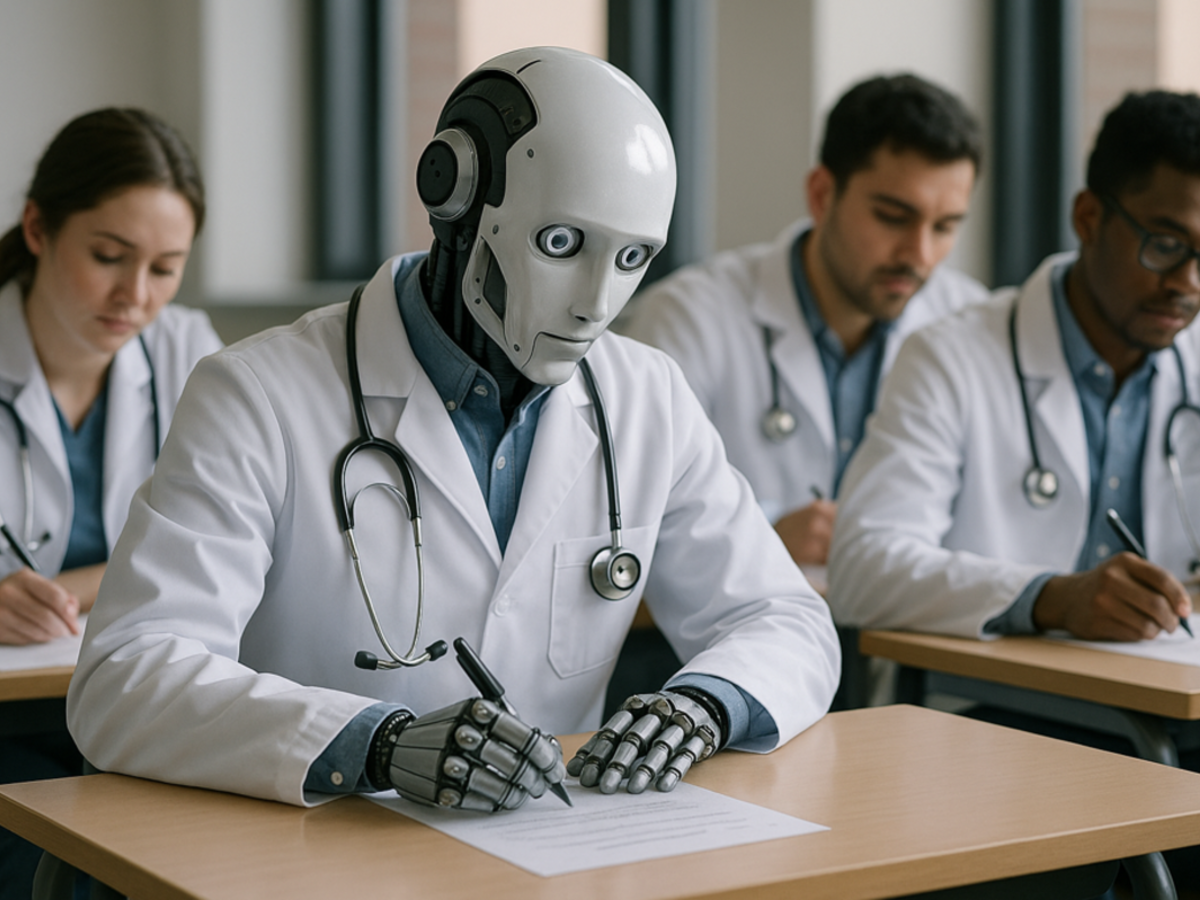
Assessment of Large Language Model Performance on Medical School Essay-Style Concept Appraisal Questions: Exploratory Study
Bing Chat (subsequently renamed Microsoft Copilot)—a ChatGPT 4.0–based large language model—demonstrated comparable performance to medical students in answering essay-style concept appraisals, while assessors struggled to differentiate artificial intelligence (AI) responses from human responses. These results highlight the need to prepare students and educators for a future world of AI by fostering reflective learning practices and critical thinking.

How Does ChatGPT Perform on the United States Medical Licensing Examination (USMLE)? The Implications of Large Language Models for Medical Education and Knowledge Assessment
Chat Generative Pre-trained Transformer (ChatGPT) is a 175-billion-parameter natural language processing model that can generate conversation-style responses to user input. This study aimed to evaluate the performance of ChatGPT on questions within the scope of the United States Medical Licensing Examination (USMLE) Step 1 and Step 2 exams, as well as to analyze responses for user interpretability.
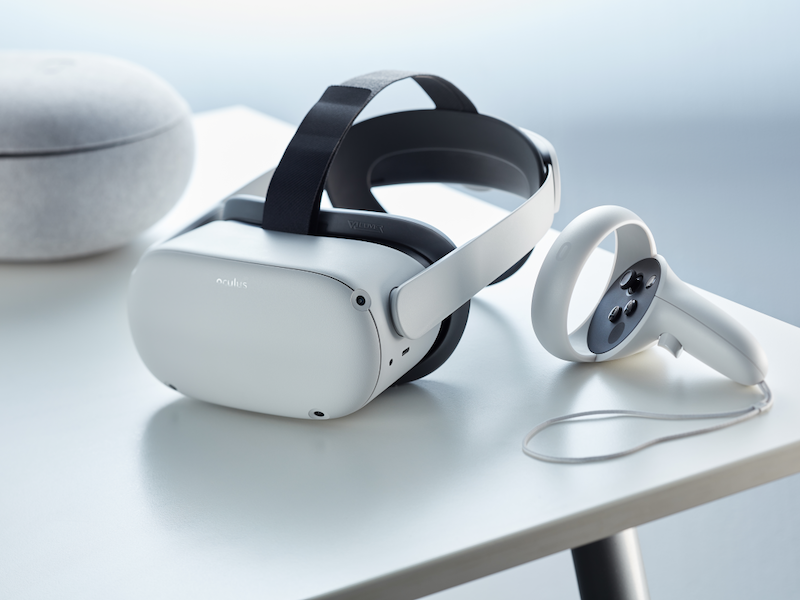
The Use of a Novel Virtual Reality Training Tool for Peritoneal Dialysis: Qualitative Assessment Among Health Care Professionals
Effective peritoneal dialysis (PD) training is essential for performing dialysis at home and reducing the risk of peritonitis and other PD-related infections. Virtual reality (VR) is an innovative learning tool that is able to combine theoretical information, interactivity, and behavioral instructions while offering a playful learning environment. To improve patient training for PD, Fresenius Medical Care launched the stay•safe MyTraining VR, a novel educational program based on the use of a VR headset and a handheld controller.
Hear From JMIR Medical Education Authors

Join Juliana Samson from Coventry University as she discusses a groundbreaking scoping review on Virtual Simulated Placements (VSPs) in healthcare education. This video explores how VSPs have surged since 2020, driven by the COVID-19 pandemic. The discussion will uncover their impact on student learning and skill development, while also examining crucial gaps in research and diverse representation. Discover what this review means for the future of virtual learning across medicine, nursing, and allied health.
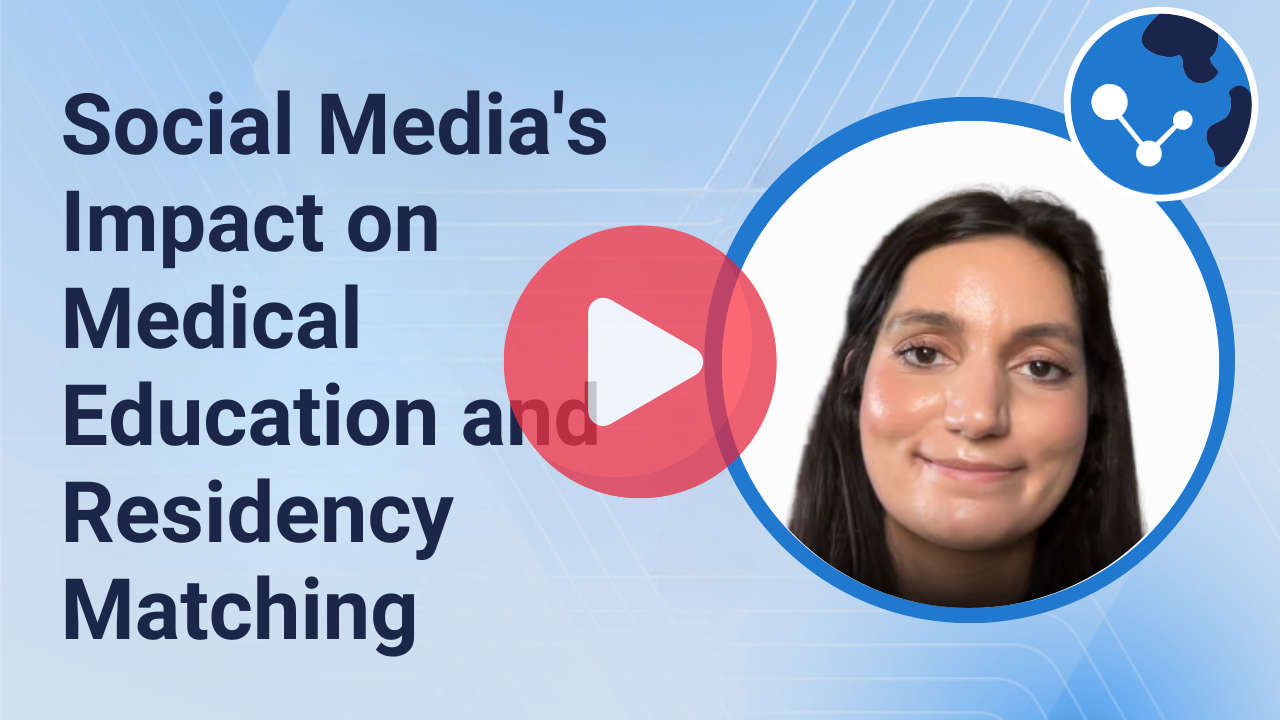
The COVID-19 pandemic shifted residency interviews online, dramatically increasing social media's role in program recruitment. Join Simi Jandu from the University of Massachusetts T.H. Chan School of Medicine as she discusses new research revealing how social media, particularly Instagram and Reddit, influences residency candidates' perceptions and ranking of programs. Discover what content prospective residents find most valuable and how programs can effectively leverage social media for recruitment.